The Kindest ‘No’ in the Kitchen: Why Sharing Medicine Is Rarely a Favour
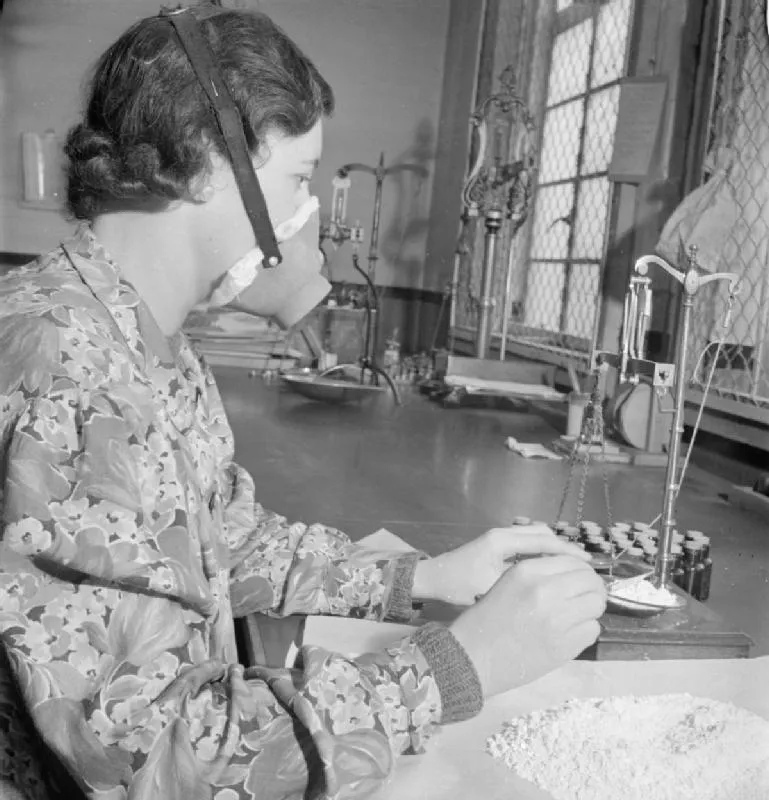
Photo: Ministry of Information Photo Division Photographer, Smith Jack, Public domain, via Wikimedia Commons
It usually starts with the best intentions. Someone in your kitchen has a headache, a flare-up of hayfever, or a dodgy knee, and you remember there’s something in the cupboard that might help. Passing over a tablet can feel like a small, kind gesture. But medicines are not quite like plasters or tissues. They are chosen for a particular person, at a particular dose, with a particular set of risks in mind. Sharing them — even ‘just one’ — can turn a helpful moment into a real problem.
At JP Pharmacy Care, we are not here to make you feel awkward about being cautious. We are here to make the cautious choice feel a bit easier to explain. Because the truth is that refusing to share a medicine is often the more caring thing to do.
Why one tablet is not automatically a small risk
A medicine that works well for you may not be safe for the person asking. That is not about being precious with your supply. It is about how medicines behave in different bodies.
Someone could have a hidden allergy to an ingredient — not just the active drug, but a filler, colouring or coating. Someone else could be taking a prescription medicine that interacts with what you offer. A person with kidney or liver problems may process a medicine differently. Pregnancy, breastfeeding, asthma, stomach ulcers, high blood pressure and age can all change the picture. And children are not simply small adults; many adult tablets are completely unsuitable for them.
Dose matters too. A tablet that is right for you might be too strong, too weak, or simply the wrong formulation for someone else. There is also the question of what the medicine is actually for. A headache has many possible causes. A cough can be a cold, an allergy, reflux, or something that needs a conversation with a clinician. Handing over a tablet can mask a symptom that deserves proper attention.
The common scenarios — and what is really being asked
Most requests are not dramatic. They are ordinary, slightly awkward moments.
A friend is visiting and asks for an antihistamine because their hayfever is playing up. A relative with a bad back wonders if you have any ‘strong painkillers’ left from your own prescription. A teenager at a sleepover asks for something for period pain. A neighbour wants an antibiotic because they are convinced their cold has turned bacterial.
In each case, the kind answer is not always the quick answer. Antihistamines can cause drowsiness or interact with other medicines. Prescription painkillers may contain opioids or other drugs that are dangerous for someone else, especially alongside alcohol or other sedatives. Antibiotics do not treat viral colds, and sharing them adds to the serious problem of antibiotic resistance. Even ordinary over-the-counter painkillers have maximum daily doses and can interact with prescription medicines.
How to say no without making it a thing
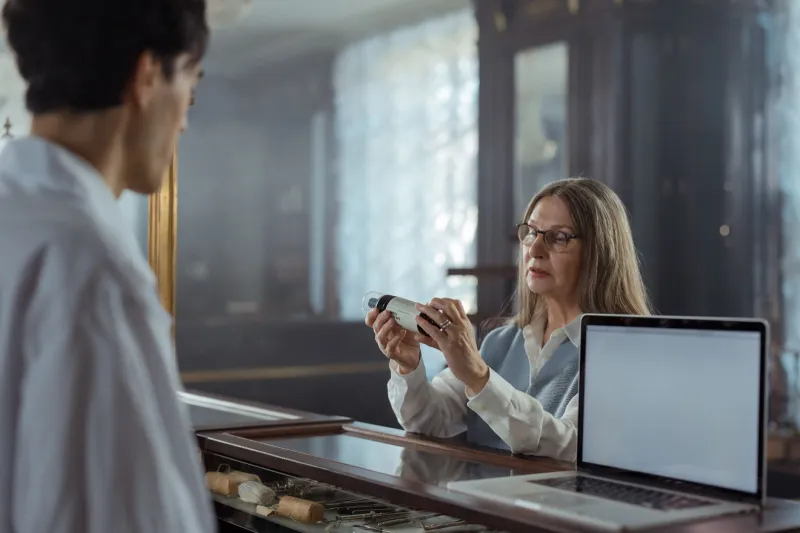
You do not need a long lecture. A short, warm refusal usually works better than a detailed explanation.
Try something like: ‘I’m really sorry — I don’t share medicines, even simple ones. I’ve learned it’s not worth the risk.’ Or: ‘I’d rather not hand out tablets in case it clashes with something you already take. The pharmacy down the road can sort you out quickly.’ If someone is in real discomfort, you can offer practical help instead: a glass of water, a rest, a lift to the pharmacy, or help ringing NHS 111 if things feel urgent.
For a child, be firmer: ‘I can’t give a grown-up tablet to a child. Let’s check with a pharmacist or call 111.’ For a visitor who is insistent, you can keep it simple: ‘It’s not about trusting you — it’s that I’m not the right person to decide what’s safe for you.’
If a medicine has already been borrowed
Try not to panic. Ask what was taken, how much, and when. Look at the packaging together if you can. Then get advice. A community pharmacist can help with many medicine queries, including whether a dose is likely to be a concern. NHS 111 is there for urgent advice when you are unsure. If someone has collapsed, is struggling to breathe, has swelling of the face or throat, or has a seizure, call 999.
Do not encourage vomiting unless a healthcare professional tells you to. Keep the packaging or leaflet, note the time, and mention any other medicines the person takes, including prescribed medicines, over-the-counter remedies and supplements. If the person is a child, say so clearly — dose advice depends on age and weight.
Storing medicines so they are less of a temptation
A lot of borrowing happens because medicines are visible and easy to reach. A few small changes can help.
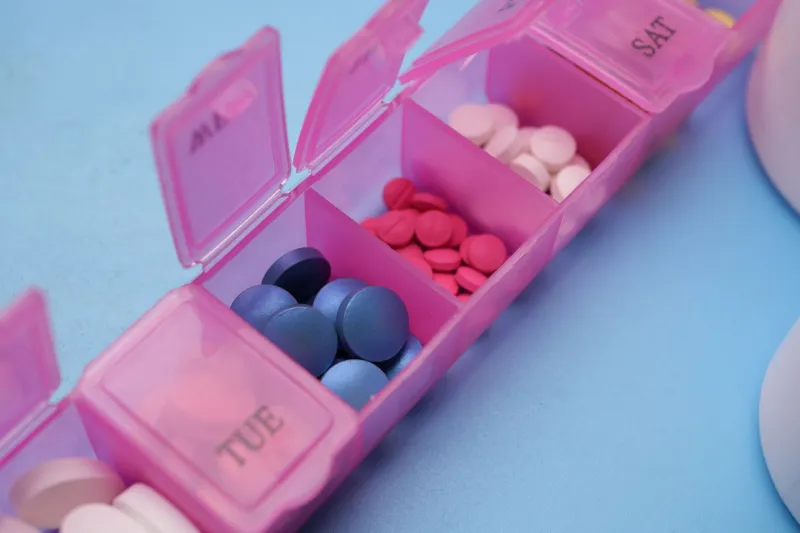
- Keep medicines in their original boxes with the label and leaflet. Decanting tablets into unlabelled pots makes it much harder to know what they are if something goes wrong.
- Store them out of sight and out of reach — ideally in a locked box or cupboard, especially if children or vulnerable adults visit.
- Avoid the bathroom cabinet if steam and heat are an issue; a cool, dry cupboard is usually better.
- Keep prescription medicines separate from household over-the-counter remedies, and check expiry dates now and then.
- Return unwanted or expired medicines to a pharmacy. Do not keep a ‘just in case’ stash of leftover antibiotics or old painkillers.
The bottom line
Sharing medicine can feel like a small kindness, but it skips the checks that make medicines safe: the right person, the right dose, the right reason and the right advice. You are allowed to say no. You are allowed to direct someone to a pharmacist instead. And if you have already said yes and you are worried, you are allowed to ask for help straight away.
If you are unsure about a medicine in your cupboard, bring it to your local pharmacy and ask. A quiet conversation at the counter is often the safest first step — and it is exactly the kind of everyday care we are here for.