Juice Before Pills? A Calm Look at Grapefruit and Your Medicines
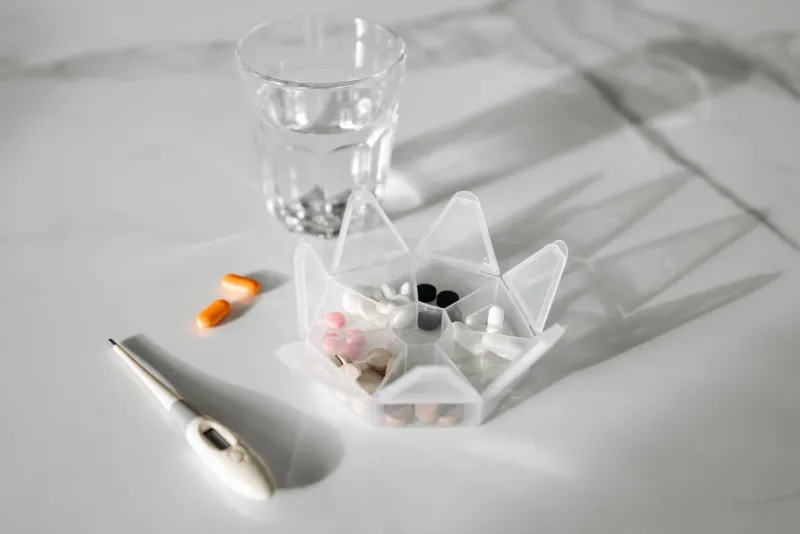
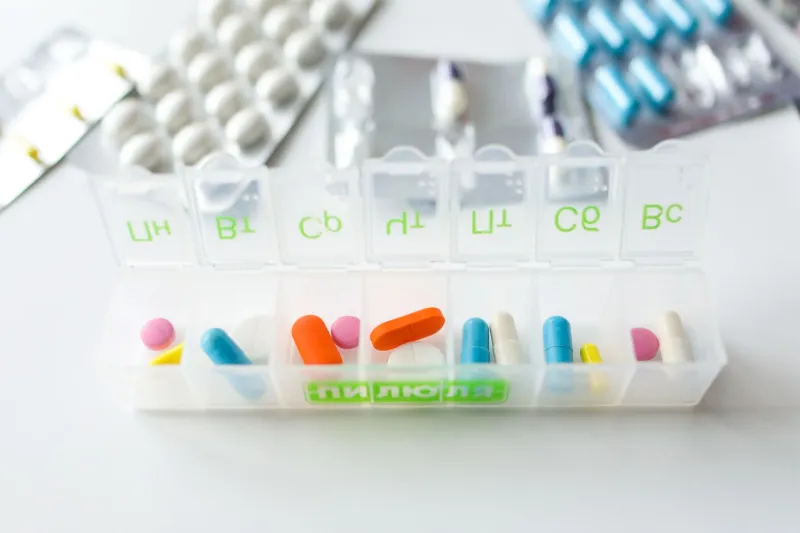
It's a quarter past seven on a wet Tuesday morning. The kettle is on, the radio is mumbling about the weather, and you are doing that familiar two-step between the fridge and the pill box: a glass of grapefruit juice in one hand, the morning tablets in the other. Nothing about that picture looks risky. For most people, it genuinely isn't.
But there is a small, specific group of medicines where that particular fruit can change what happens inside your body. Not in a dramatic, ambulance-at-the-door way, but in a quiet, dose-creeping-up way that is easy to overlook and worth knowing about.
The short version, before anything else
Grapefruit does not interact with the vast majority of medicines. If you take a tablet for your thyroid, an antibiotic for a chest infection, or a standard painkiller now and then, the fruit in your fridge is almost certainly irrelevant to it.
For a handful of medicines, though — including some statins and some blood-pressure tablets — it can raise the amount of medicine circulating in your bloodstream, which in turn can mean more side effects. That is the whole story. No need to tip the juice down the sink in a panic, and absolutely no need to stop a prescribed tablet on your own.
What the fruit is actually doing
Grapefruit and its close relatives contain natural compounds called furanocoumarins. In the wall of your small intestine sits an enzyme with the unglamorous name CYP3A4, whose day job is to break down part of certain drugs before they ever reach the rest of your body. Furanocoumarins switch a good chunk of that enzyme off. The result is straightforward: more of the medicine gets through than was intended, sometimes considerably more.
That is why this is best understood as a dose problem rather than an allergy. You are not reacting to the fruit. You are simply absorbing a bigger share of a tablet than your prescription was designed around.
Which medicines keep coming up in this conversation
A few familiar names show up again and again:
- Simvastatin is the best-known example, and the one most often flagged on the label. It is worth knowing that not all statins behave the same way — atorvastatin is far less affected, and pravastatin or rosuvastatin barely at all. So 'I'm on a statin' is the start of the question, not the answer.
- Some calcium channel blockers used for high blood pressure and angina, including felodipine, nifedipine and amlodipine.
- Immunosuppressant medicines such as ciclosporin and tacrolimus, where blood levels are monitored closely for good reason.
- A scattering of others — certain medicines for irregular heart rhythms, some epilepsy treatments, and a number of specialist drugs used in hospital care.
That is not a list to memorise. It is a reason to check, because the reliable answer for your own medicine is written on your own leaflet.
Why the warning is so easy to walk past
The outer box often says nothing at all. The patient information leaflet inside — the folded paper you promise yourself you will read one day — may mention grapefruit somewhere around the ninth paragraph of a section headed 'Other medicines and [name of drug]'. On a busy morning, with the school run looming, that is a warning built to be missed.
Then there is the whole-fruit-versus-juice question. A glass of juice delivers a concentrated hit fairly quickly, which is why juice gets most of the attention. Eating a whole grapefruit generally has a smaller effect, but a daily habit can still add up. And it isn't only the obvious fruit: Seville oranges (the bitter ones that go into marmalade), pomelo and tangelos belong to the same family and can behave similarly. Fruit juice blends, smoothies and 'citrus' drinks sometimes contain grapefruit without announcing it on the front of the carton.
'I'll just leave a gap between them' — the shaky fix
It sounds sensible, and plenty of people try it. Unfortunately, the enzyme-blocking effect can linger for a day or more after a glass of juice, so shifting your tablet by two hours does not reliably dodge it. If a medicine is genuinely affected, the usual advice is to avoid grapefruit rather than to timetable around it. If you are unsure which camp you are in, ask — this is exactly the sort of thing a pharmacist answers several times a week.
What not to do
- Don't stop taking a prescribed medicine because of something you have read, including this article.
- Don't switch yourself onto a different statin or blood-pressure tablet. That is a conversation, not a decision to make alone.
- Don't assume herbal or 'natural' products are exempt. Some, like St John's wort, bring their own interactions to the table.
The three-line note worth taking to the counter
Most medicine questions are settled in under five minutes at a pharmacy counter, provided you arrive with the right details. Before your next visit, jot three lines in your phone notes:
- What you take — the name, the strength and how often, ideally read straight from the box.
- Your citrus habit — half a grapefruit most mornings, a large glass of juice daily, or only now and then. Be honest about the size of the glass; 'a small one' covers a wide range.
- The question itself — 'Do I need to change the drink, the medicine, or neither?'
That last line is the useful one, because it hands the problem over rather than half-solving it yourself. A pharmacist can check your full list, including anything you buy over the counter, and tell you whether a simple swap solves it.
If a review is coming up anyway
Many people in the UK have a yearly medicine review with their GP surgery or a structured medication review with a practice pharmacist. If one is on the horizon, this is a good moment to mention anything you drink daily — juice, herbal teas, and alcohol included — rather than only the tablets on your repeat list. Bring the note. It saves time, and it makes the conversation about your actual routine rather than an idealised version of it.
The calm bottom line
For most households, the morning juice stays exactly where it is. For a smaller number of people, a switch from grapefruit juice to orange juice — or, occasionally, a different medicine that does not mind the fruit — is a two-minute conversation with someone who can see your full list.
The only genuinely wrong move is saying nothing and quietly hoping it doesn't matter. A question at the counter costs nothing, and it is far easier than wondering afterwards.