The Medicine Label’s Small Print: When ‘With Food’, ‘No Alcohol’ and ‘Finish the Course’ Really Matter
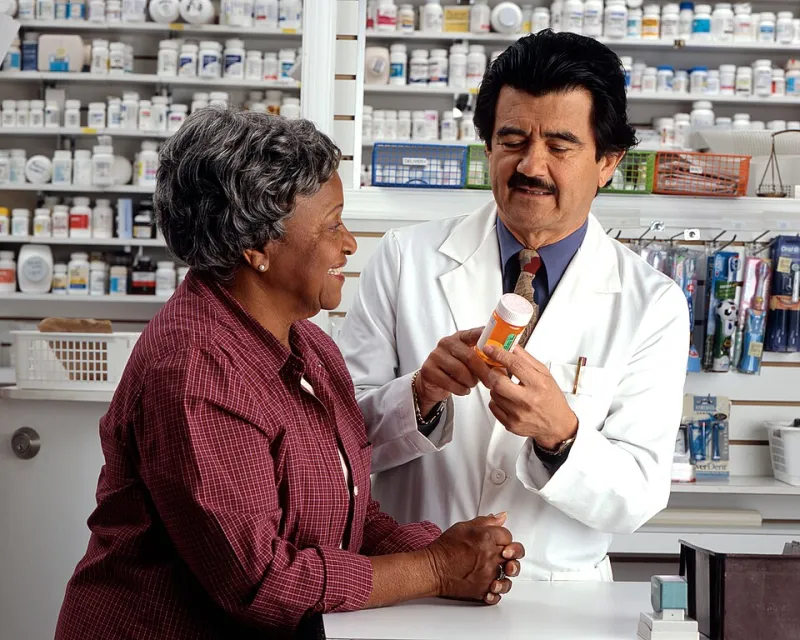
Photo: Rhoda Baer (Photographer), Public domain, via Wikimedia Commons
Most of us have done it: you get a new medicine home, glance at the label, and file away the important-looking bits somewhere between ‘take one tablet’ and ‘do not exceed the stated dose’. The smaller instructions — with food, no alcohol, finish the course — can blur into the background. That is not a character flaw. It is a busy life. But as a pharmacist, I can tell you that some of those little lines are doing genuinely important work, while others are more of a cautious nudge. Here is how to tell the difference, and how to ask about it without feeling awkward.
Labels are cautious for a reason — but not every line is equal
A medicine label is written for a wide range of people, not just you. It has to account for someone with a sensitive stomach, someone taking other medicines, someone who might drink at the weekend, and someone who might stop treatment early. Some instructions protect your stomach, some protect the medicine’s absorption, and some prevent a dangerous interaction. Others are there because a small number of people had side effects in trials. That does not make them pointless. It just means the instruction deserves a sensible conversation rather than blind panic or a shrug.
‘Take with food’: when food is doing real work
Food can do several jobs. It can cushion the stomach, slow absorption, reduce nausea, or help the body use the medicine properly. Common examples include ibuprofen and naproxen, which are kinder to the stomach when taken with or after food; metformin, where food reduces tummy upset; and some antibiotics and iron tablets, where a meal can make nausea more manageable. Some medicines are different: levothyroxine usually wants an empty stomach, and some antibiotics are best taken away from food or dairy. That is why ‘with food’ is not a universal rule you can apply to every box.
If the label says with food and you have forgotten, do not double up or skip the next dose in a panic. Take the missed dose with a snack if it is not yet time for the next one, and ask your pharmacist about the best way forward. A small biscuit or glass of milk is not always enough — some instructions mean a proper meal — but a pharmacist can tell you what matters for your medicine.
‘Avoid alcohol’: from gentle warning to firm no
This one varies enormously. With metronidazole and tinidazole, alcohol can cause a really unpleasant reaction, so the advice is to avoid it during the course and for a period afterwards. With sedating antihistamines, sleeping tablets, opioids or some antidepressants, alcohol can add to drowsiness and increase the risk of falls or accidents. With warfarin, diabetes medicines or epilepsy medicines, alcohol can affect control in ways that are not always predictable. For some medicines, a small amount may be acceptable; for others, it is safer to avoid completely. The label cannot know your full picture, so ask.
‘Finish the course’: usually about antibiotics, sometimes about safety
If you are given antibiotics, finishing the prescribed course matters. Feeling better does not always mean the infection has cleared, and stopping early can allow bacteria to bounce back and increase the chance of resistance. If side effects are making you want to stop, ring the pharmacist or prescriber rather than simply abandoning the box. Some non-antibiotic medicines also need to be stopped gradually — for example, steroids, some antidepressants, epilepsy medicines and beta blockers — because sudden withdrawal can cause problems. Other medicines are taken only when needed and do not have a ‘course’ at all. The label should make this clear, but if it does not, ask.
The instructions we skim most often
Alongside food and alcohol, the lines people most often miss are ‘take at regular intervals’, ‘do not exceed the stated dose’, ‘swallow whole’, ‘dissolve under the tongue’, ‘store in the fridge’ and ‘avoid sunlight’. None of these are decoration. If a tablet is designed to release slowly, crushing it can change how much medicine you get at once. If a medicine needs to be kept cool, a warm windowsill is not kind to it. If a dose is ‘every four hours’, taking two doses together is not a shortcut.
How to raise it without feeling judged
You do not need to arrive with perfect questions. A pharmacist would much rather hear ‘I have been taking this with breakfast, but the label says empty stomach — does that matter?’ than have you quietly worry at home. Bring the box or a photo of the label, and mention anything else you take, including vitamins, herbal remedies and medicines bought without a prescription. If you are pregnant, breastfeeding, or have kidney or liver problems, say so. None of this is nosy; it is the information that makes the advice safe.
A simple script can help: ‘I want to check I am taking this the right way. The label says with food or no alcohol or finish the course. Can you tell me what that means for me?’ If you have missed a dose or had a drink without thinking, say that too. Pharmacists are used to real life.
A sixty-second label check worth doing
Before you put a new medicine in the cupboard, read the dose, how often you can take it, the maximum in twenty-four hours, whether food matters, whether alcohol is a problem, whether you need to finish the course, and how to store it. Write the key points on the box in pen if that helps. Set an alarm for doses that need spacing. And if the label and your life do not fit together, ask. That is what we are here for.
The short answer to ‘does it really matter?’ is: sometimes a great deal, sometimes a little, and it depends on the medicine. The safe move is not to guess. A quick word at the pharmacy counter is one of the simplest ways to make sure the label on the box actually works for you.