The Quiet Word at the Counter: Getting Help for Private Problems Without the Awkwardness

You’re standing in the queue with a box tucked under your arm, hoping nobody reads the label. Or maybe you haven’t even picked anything up yet, because you’re not sure what to ask for. Either way, you’re not alone. Pharmacists talk about private problems every single day, and they’d much rather help you get the right thing than watch you guess.
You’re Not the First, and You Won’t Be the Last
Thrush, piles, cystitis, constipation, an itchy rash in an intimate place — these are ordinary health problems. They are not embarrassing to the person behind the counter. A pharmacist is used to conversations about bowels, discharge, burning, bleeding and bottoms. It is clinical work, not gossip.
What matters is that you feel able to say enough for them to help you safely. You don’t need a medical vocabulary. You don’t need to announce your business to the whole shop. And you certainly don’t need to apologise.
What ‘Confidential’ Actually Means Behind the Counter
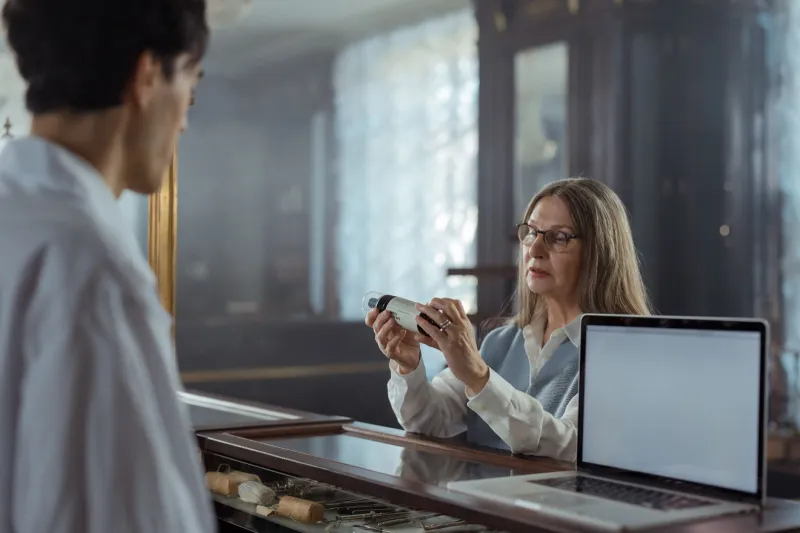
Pharmacy teams in the UK are bound by confidentiality. Information is shared only with the people who need it to provide your care. Most pharmacies have a private consultation room, and you can ask to use it. If the room is busy, ask when would be a good time to come back, or whether you can speak at the quieter end of the counter.
A simple line works: ‘Could I have a quiet word with the pharmacist, please?’ You can add: ‘I’d rather talk somewhere private if possible.’ That’s it. You don’t have to explain why in front of everyone.
A Few Words That Do the Job
You can be plain and brief. Pharmacists are used to half-sentences and pointing at boxes. Some scripts that tend to work:
- ‘I think I’ve got thrush and I’m not sure which treatment is right.’
- ‘I’ve had trouble with piles for a few days and the cream isn’t helping.’
- ‘It burns when I pee and I want to check whether it’s cystitis.’
- ‘I’m constipated and I don’t want to make it worse.’
- ‘I’ve got an itchy rash in a private area and I’m not sure what it is.’
- ‘I’d rather not say out loud — can we talk in the consultation room?’
If words fail, you can say: ‘It’s a personal problem and I’d like some advice.’ That is enough to start the conversation.
What the Pharmacist Will Probably Ask
The questions are not nosiness. They are how the pharmacist works out whether an over-the-counter treatment is safe and appropriate, or whether you need to see a GP or another service. They may ask:
- What your symptoms are, how long you’ve had them, and how severe they are.
- What you’ve already tried, and whether it helped.
- What other medicines you take, including anything from the doctor, anything bought, and any supplements.
- Whether you have allergies, long-term conditions, or are pregnant or breastfeeding.
- Whether you’ve had the problem before, and how often.
For cystitis, they may ask about fever, back pain or blood in your urine. For thrush, they may ask whether it’s a first episode or a recurring one, and whether you’re pregnant or have diabetes. For haemorrhoids, they may ask about bleeding, pain and changes in your bowel habits. For constipation, they may ask how long it’s been going on, whether there’s blood, and what medicines you take.
They will not usually need to examine you at the pharmacy. If they think an examination is needed, they will explain why and point you to the right place. You can always ask: ‘Why do you need to know that?’ A good pharmacist will explain.
The Over-the-Counter Options, in Plain English
The right choice depends on your symptoms, your history and your medicines. But here’s the general picture so you know what may come up.
For thrush, there are antifungal creams, pessaries and sometimes an oral capsule. The pharmacist will check whether the oral option is suitable for you, especially if you take other medicines, are pregnant or are breastfeeding.
For haemorrhoids, there are creams and suppositories to ease swelling and itching, plus stool softeners or laxatives if constipation is part of the problem. Pain relief may also be suggested if it’s safe for you.
For constipation, bulk-forming or osmotic laxatives are common first choices. The pharmacist will talk about fluids, fibre and how long to use a product. Stimulant laxatives are not always the best first move, especially if you’re unsure why you’re constipated.
For cystitis, sodium citrate sachets can help ease the burning, and paracetamol or ibuprofen may help with pain if they’re suitable. Antibiotics are not available over the counter in the UK, so if symptoms suggest an infection that needs treatment, the pharmacist will advise you on the next step.
For intimate skin problems, the advice depends on what’s causing it — often an emollient, an antifungal, or simply stopping a perfumed product that’s irritating the area. The pharmacist can help you work out which is most likely.
When It’s Worth Going Further
Some symptoms need more than a self-care product. Speak to a GP, NHS 111 or a sexual health clinic if you have:
- A fever, shivering or feeling very unwell.
- Blood in your urine, severe pain, or pain in your back or side.
- A new lump, a change in bleeding, or bleeding from the bottom that is new or unusual.
- Thrush that keeps coming back, or symptoms that don’t settle after treatment.
- Cystitis symptoms in pregnancy, or in a man.
- Unexplained weight loss or a persistent change in bowel habits.
Sexual health clinics are free and confidential, and you can self-refer in most areas. If you’re worried about anything sexual health related, that can be a kinder route than sitting in a GP queue.
The Ten-Second Preparation That Makes It Easier
Before you go, jot a few notes on your phone: what the symptoms are, when they started, what you’ve tried, your other medicines, any allergies, and whether you might be pregnant or breastfeeding. Bring the boxes of anything you take if you can.
If you’d feel better with a private room, ask for one. If you’d rather speak to a particular pharmacist, ask whether they’re available — it may not always be possible, but it’s a reasonable request. Going at a quieter time of day can also make the whole thing feel less exposed.
Leaving Without the Bag You Didn’t Want
You are allowed to take your time. You are allowed to say, ‘I’d like to think about that,’ and come back. You are allowed to ask for the cheaper option, the smaller pack, or a different formulation. The goal is not to get out of the shop quickly. The goal is to get the right treatment for you.
And if you do feel awkward, say so. A simple ‘This is a bit embarrassing for me’ is often met with a calm, practical response. Pharmacists are not there to judge. They are there to help you feel better — quietly, confidentially and without fuss.